First women’s wheelchair rugby nationals are an emotional milestone for veteran athletes
‘’It just kept growing and became a movement’’
‘’It just kept growing and became a movement’’
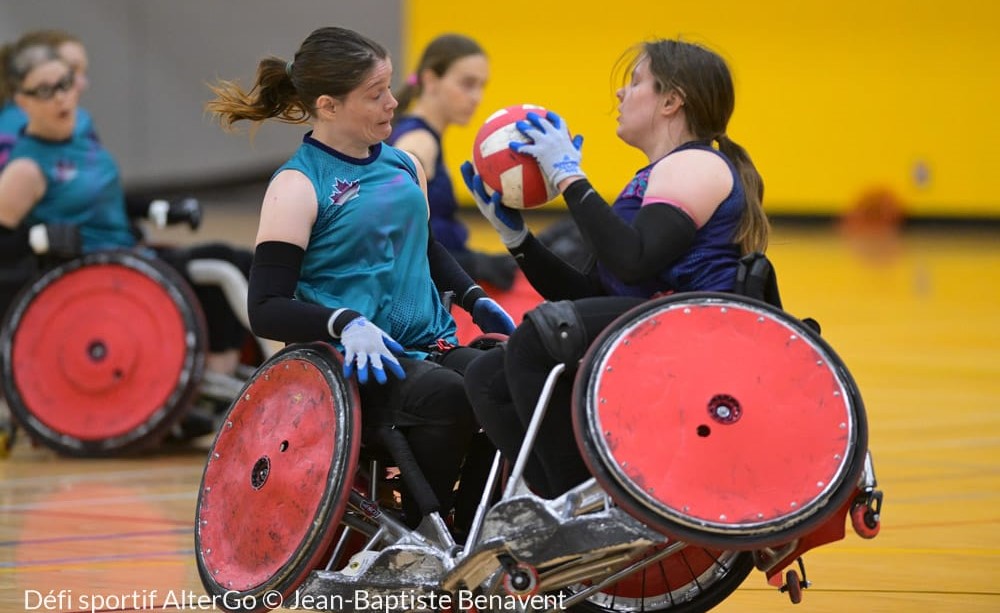
Photo: Jean-Baptiste Benavent
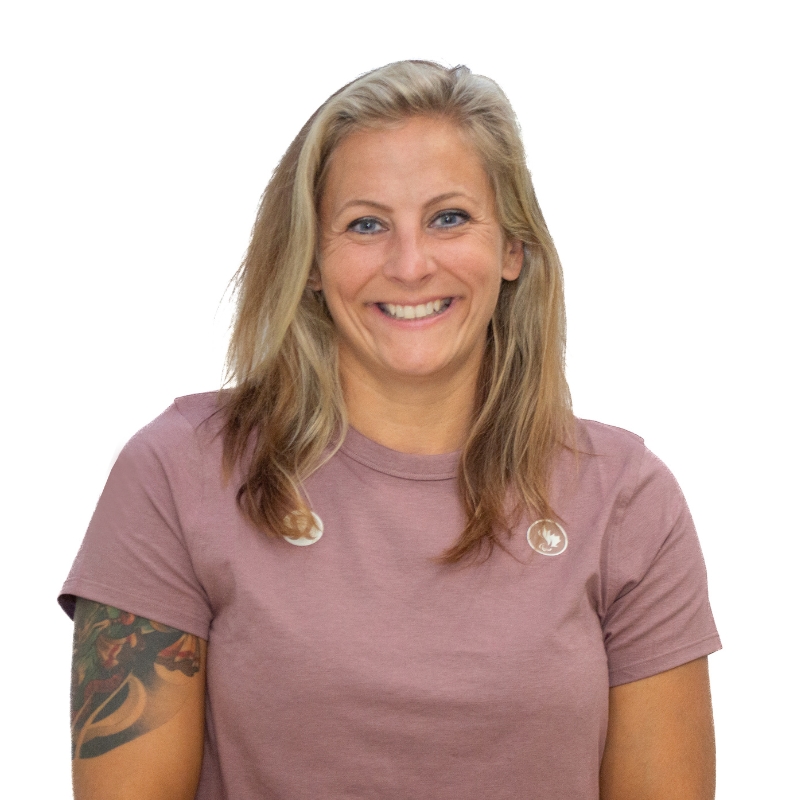
MONTREAL – Paralympian Brianna Hennessy couldn’t believe her eyes.
There she was inside a Montreal gym filled with more than 20 athletes competing at the inaugural Canadian women’s wheelchair rugby championships. She tried to explain what it meant but stopped mid-answer.
‘’I’m just so proud of everybody,’’ she said. ‘’Just to show up for each other, you see right there that bond we have.’’
Hennessy is best known as one of Canada’s top Para canoe athletes. She won a silver medal in the women’s kayak at the 2024 Paralympic Games in Paris and has remained among the world’s best since taking up paddling during the pandemic.
But wheelchair rugby was her first sport as a Para athlete. While recovering from an accident at a rehabilitation hospital in Ottawa, she watched the Ottawa Stingers play.
“They were in these bumper-car chairs, crashing into each other and having the time of their life,” she said. “I knew I wanted to do it.”
The women’s wheelchair rugby nationals, part of the Défi sportif AlterGo, Canada’s biggest multi-sport event for athletes with a disability, marks a significant step for the women’s side of the sport.
As is the case for Para ice hockey, wheelchair rugby is considered a mixed sport at the Paralympic Games, but few women are in the line-ups.
Now they have a dedicated competitive environment to continue the sport’s women’s players’ development. The momentum is expected to continue in December, when the first women’s wheelchair rugby world championships is scheduled to take place in Paris.
‘’It’s a safe space,’’ said Hennessy. ‘’To get court time, learn, and grow together.’’
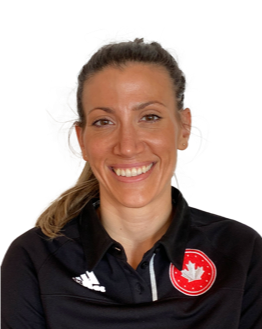
Mélanie Labelle, a member of Canada’s 2019 Parapan Am Games team that won silver, continues to be the prime leader for the women’s side of the sport. She says the nationals represent the continuation of rapid growth over the past year.
‘’It didn’t stop, it just kept growing and became a movement,’’ she said. ‘’To see competitiveness and potential is the best gift.’’
Labelle also emphasized that progress would not be possible without the people working behind the scenes.
‘’This is a volunteer-led program,’’ she said. ‘’Without them we wouldn’t be here. No volunteers mean no programs and no opportunities. And those efforts come from across the country, organizing events and training camps.’’
She also mentioned the importance of visibility, noting the impact a national championship can have on younger athletes.
‘’If they can look at this and think ‘I can do that’ – that matters,’’ Labelle said.
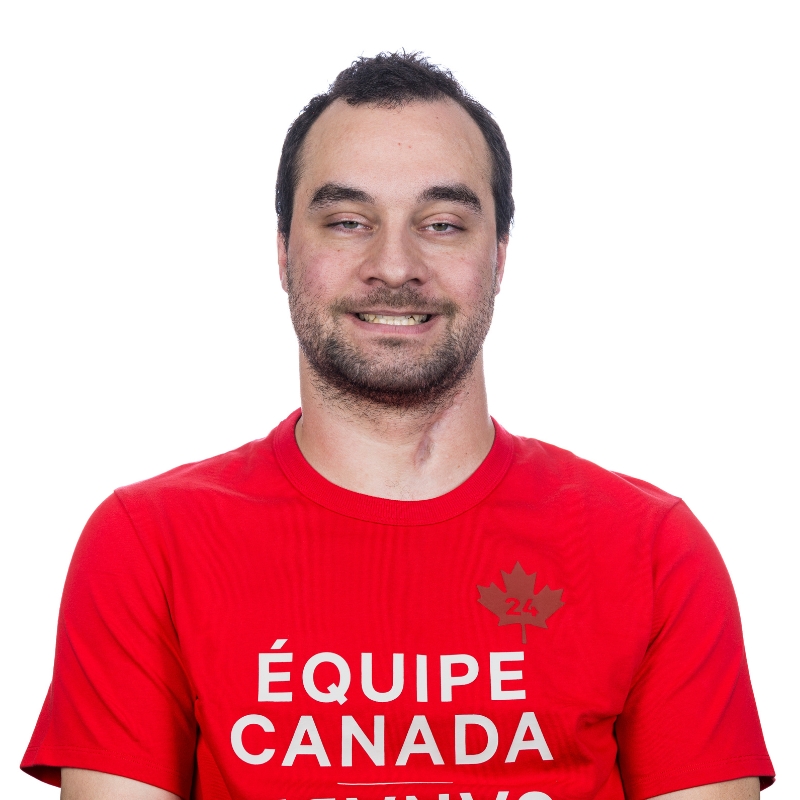
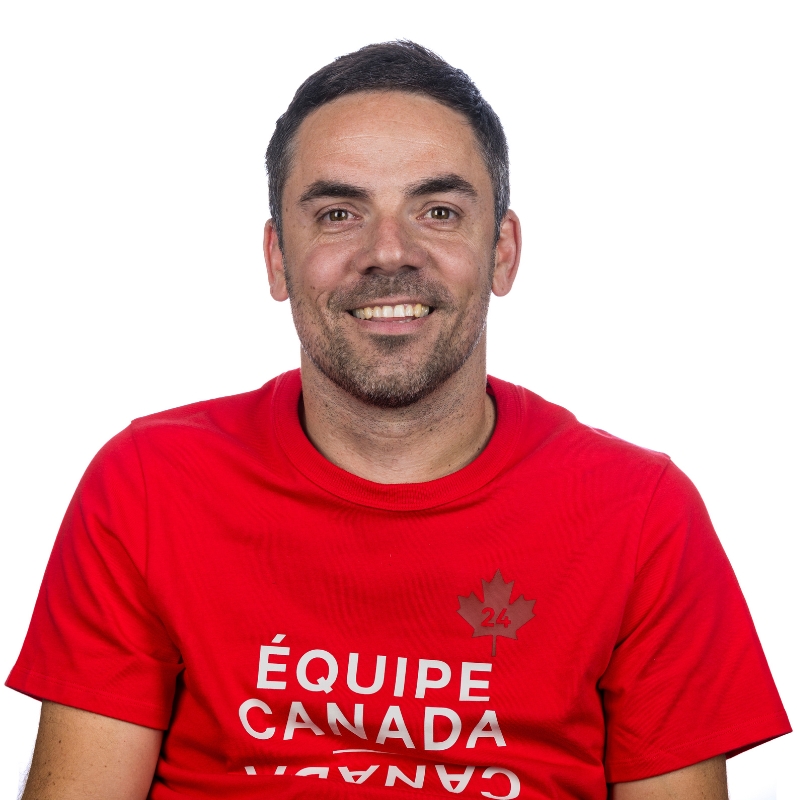
Two of the coaches at the women’s nationals were current Canadian team members and Paralympians Patrice Dagenais and Anthony Létourneau.
‘’For the women’s game, this is a great step forward,’’ said Dagenais. ‘’The commitment from the athletes has been strong and we’re seeing growth.’’
Dagenais hopes to help create opportunities for women similar to those he experienced in sport.
‘’If it wasn’t for rugby, I don’t know where I would be,’’ he said.
All agree there are many challenges ahead for women’s wheelchair rugby and it’s the usual suspects: funding and infrastructure.
In their individual interviews with CPC, Hennessy and Labelle both fought back tears as they reflected on how far the sport has come.
‘’By the end of this weekend, we’re going to be different players,’’ she said. ‘’And that’s the exciting part.’’
"*" indicates required fields


"*" indicates required fields