Before the Podium: Where belief begins
"I just realized in that moment, this is for me. This is what I was supposed to do."
"I just realized in that moment, this is for me. This is what I was supposed to do."
The first challenge Leanne Taylor had to solve after her cycling injury wasn’t athletic. It was getting dressed.
“I remember learning how to put on pants again as a wheelchair user,” she says, “and then thinking, ‘that’s so hard. What am I going to do that I actually want to put on pants for?'”
It’s not the question you’d expect to lead somewhere. But for Taylor, it did.
In the weeks after her injury, she was learning what her life would look like. She assumed that the sports she loved – swimming, biking, running – were no longer possible.
Then a few Paralympians showed up in her hospital room.
They didn’t have a pitch. They just planted an idea – the belief that competing in Para sports was a possibility.
“They said, maybe this is an option for you,” Taylor remembers.
That night, she and her sister were on their phones doing the most modern version of research: googling which sports existed at the Paralympics, then finding the athletes on Instagram to see what their lives looked like. Women swimming in open water. Riding bikes. Speeding in racing chairs. All the things Taylor had believed were over for her.
“What they’re doing with their lives is so cool,” she remembers thinking.
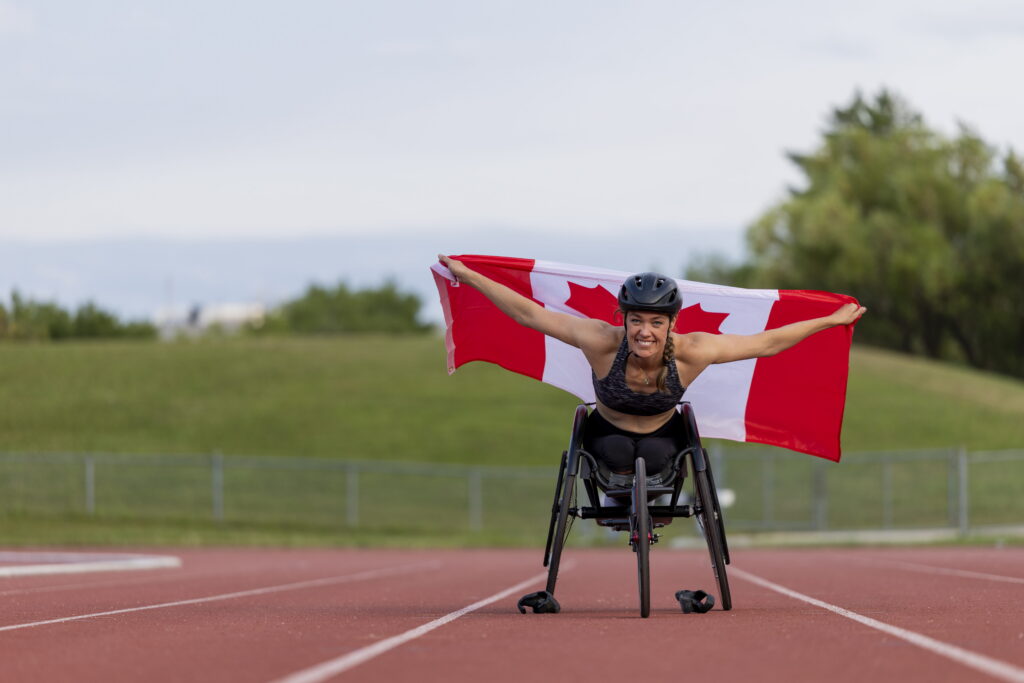
That’s how she landed on Para triathlon – because it let her do everything at once: swim, bike, race, and eventually, compete at the highest level.
It’s also how she found her way to Carolyn Murray, the coach who would be in her corner at the Games.
Taylor didn’t know how the sport worked.
“How does a wheelchair user swim in the ocean? How do they get from the swim into the bike?” she remembers thinking.
Murray got on a call and explained it from scratch. From there, Taylor started training on her own, making up sessions and reporting back. Looking back on those workouts, Taylor laughs at how little she knew about preparing for Para triathlon.
Murray started programming real workouts. A few months in, she flagged an opportunity: a classification race in Florida, that March. Taylor had been injured the previous July. She wasn’t sure she was ready. She’d never swum in open water. She rode her bike outside for the first time during the race’s course familiarization and cried.
“It was so lovely,” she says. “I was so excited just to be on a bike again.”
She went into the race with the hope of finishing. “I just realized in that moment, this is for me. This is what I was supposed to do.”
Around the same time, a woman named Kristine Cowley came to visit through a peer-mentorship program run by Spinal Cord Injury Manitoba. Cowley is a researcher, a mother of twins born after her own injury, and a Paralympian. She didn’t have a script either, she just showed Taylor what a full life could look like.
“For someone to come and show me that was so important,” Taylor says, “because then I thought maybe I can have all these things too.”
None of this made the sport easy. Para triathlon is still a young enough field that there isn’t always an expert who has solved your exact problem before, every athlete’s body and equipment setup is a little different, which meant Taylor spent her early training learning to trust her own read on things over anyone else’s expertise.
“I had to develop a lot of confidence in not always being able to rely on an expert, but rely on myself,” she says. “I think the learning was the hardest part.”
She’s also learned and experienced that Para sport doesn’t move through institutions so much as it moves through people, one athlete handing something to the next.
She got a vivid reminder of that at a local triathlon, her final tune-up race before the Paris 2024 Paralympic Games. A five-year-old girl with spina bifida had driven in from Saskatchewan just to meet her and then challenged her to a race.
“She was hardcore,” Taylor remarked. Racing a five-year-old on her way to the biggest competition of her life put things in perspective: this is what Para sport can be, a relay of mentors passing something forward, and athletes, eventually, becoming the person in the hospital room doorway for someone else.
None of this happened in isolation. It was a phone call explaining how the sport worked. A peer-mentorship program. A coach who kept showing up. Meaningful work, done by different people and different organizations, long before the podium. It’s the kind of work the Paralympic Foundation of Canada (PFC) helps fund, improving access to Para sport before anyone’s even thinking about a podium.
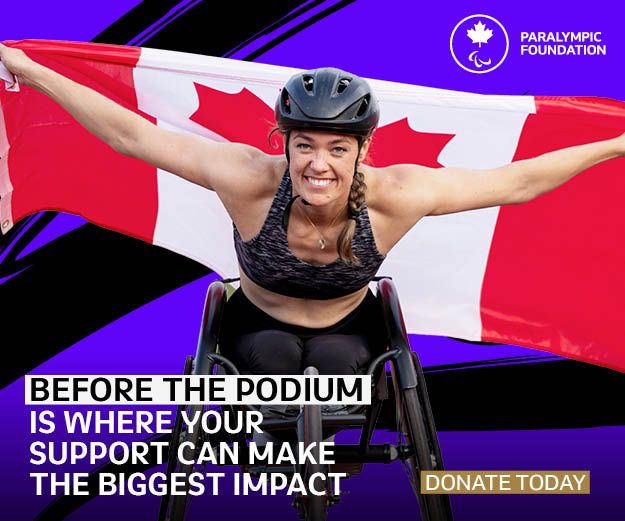
Before the Podium is where belief begins and where your support can make a big impact.
"*" indicates required fields