Who should be Canada’s first Para ice hockey player in Hockey Hall of Fame?
Team Canada players share their picks
Team Canada players share their picks
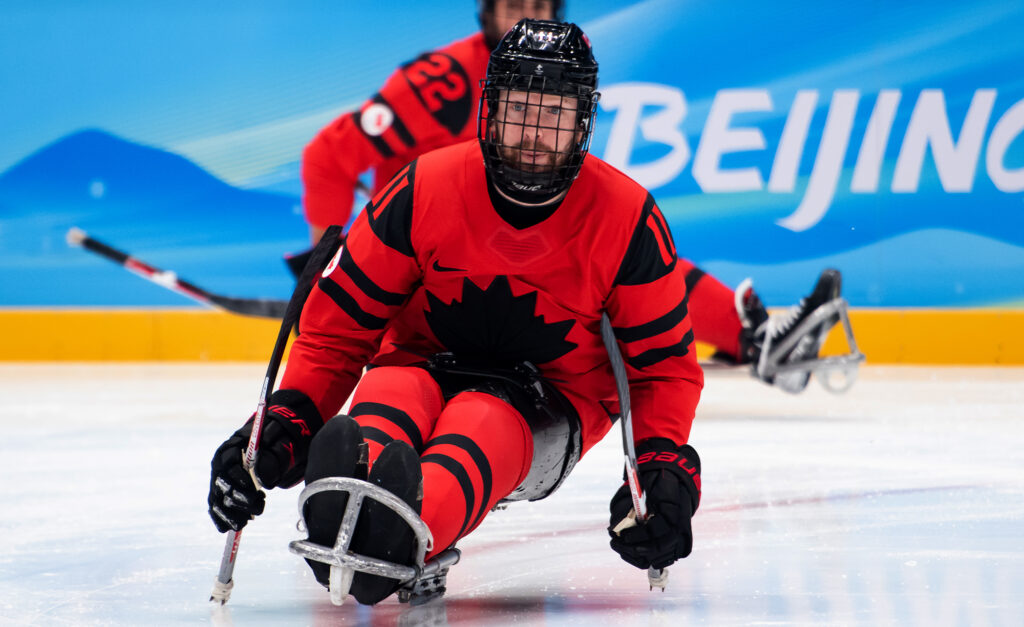
CALGARY – In a fun interview prior to the 2026 Paralympic Winter Games, Canadian players were asked who the first Para ice hockey inductee into the Hockey Hall of Fame should be.
This year’s squad encompassed a wide array of expertize, including six-time Paralympian Greg Westlake (a pick by a few players, even though he is not officially retired), five-time Paralympian Adam Dixon, and four-time Paralympian Tyler McGregor.
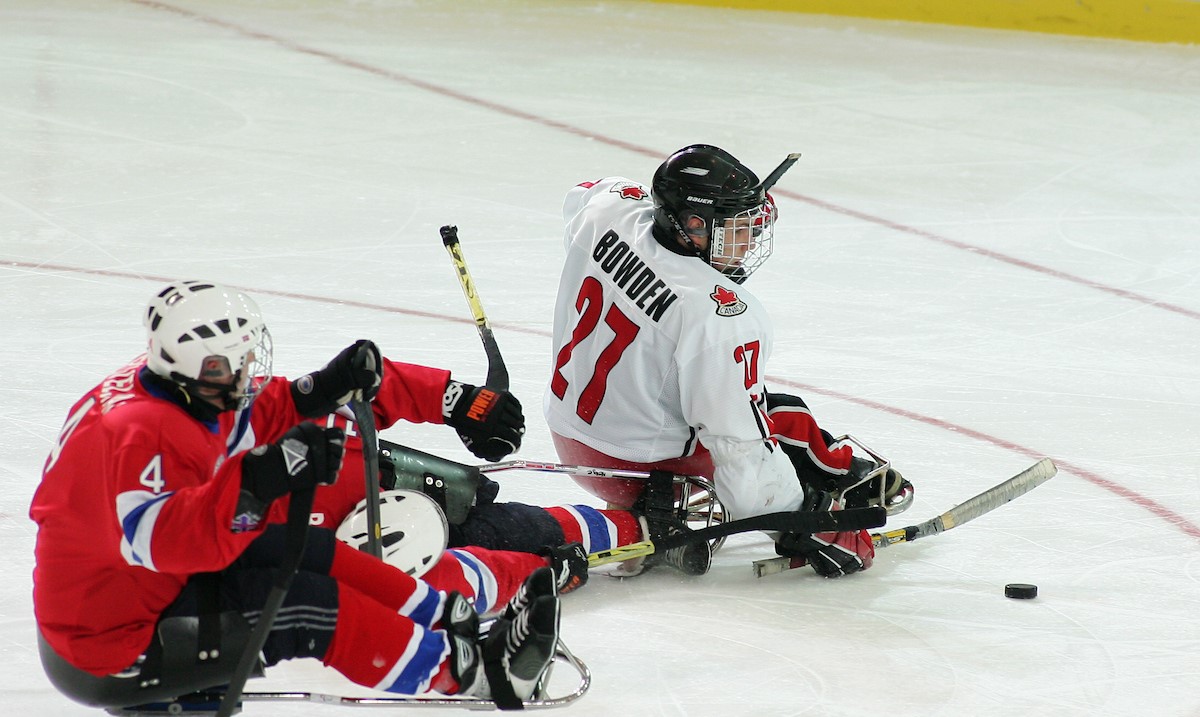
Reflecting on pioneers in the sport across multiple interviews, one name consistently stood out: Brad Bowden.
Bowden was a constant force up front for Team Canada from 1999 to 2014. At the Torino 2006 Paralympic Winter Games, he scored the gold medal–winning goal. Four years later in Vancouver, he was named tournament MVP.
He remained a key contributor in Sochi 2014, scoring once and adding two assists in the bronze medal game.
Bowden was once again front and centre at the 2014 Games in Sochi. He scored the winning goal and had two assists in the bronze medal game to lead Canada to a 3-0 victory over Norway. Bowden was among Canada’s top scorers in Sochi, with five points in five games.
His former teammates McGregor and Dixon highlighted Bowden’s incredible career and contributions to the growth of Para ice hockey.
‘’Brad was at the top of the sport for years,’’ said Dixon. ‘’Not just for his skill, but for everything he’s done to promote Para hockey and inspire younger players.’’
High scoring forward Dominic Cozzolino concurred.
‘’If anyone deserves to be first it’s him,’’ said the two-time Paralympian. ‘’He’s helped build this program and brought excitement to every team he’s been a part of. The sport wouldn’t be where it is without him.’’
Six-time Paralympian Billy Bridges, who retired after the 2022 Games, drew frequent mentions as did Westlake who would not be eligible yet. Bridges and Westlake rank first and second in Canada’s all-time scoring.
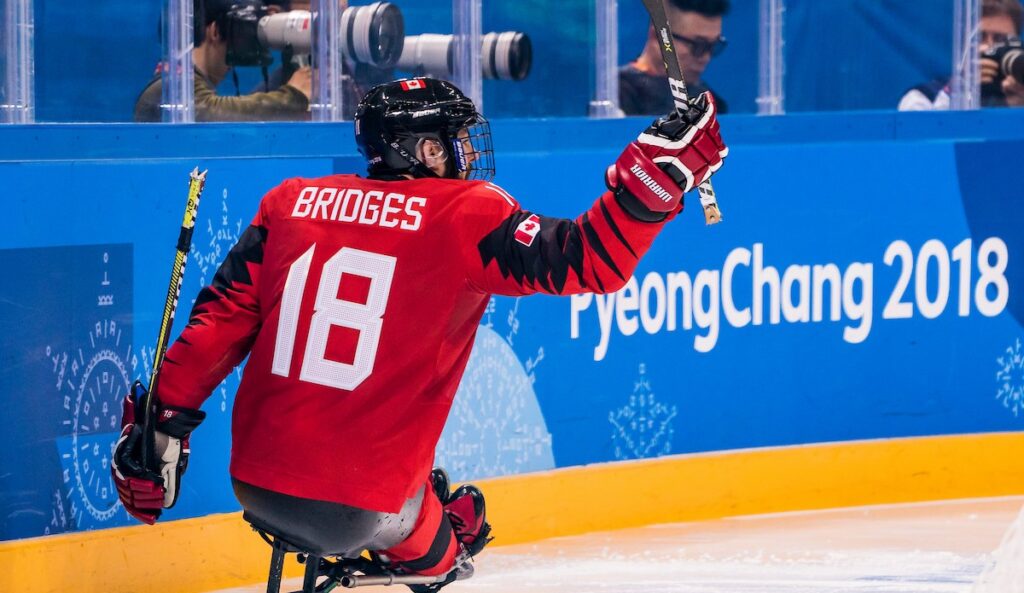
‘’It’s hard to argue with Billy Bridges,’’ said McGregor. ‘’When you go up the skill level he is a strong contender to get in there first.
“Greg and I have trained together our entire careers. He’s an intense guy, much like myself, and I love that part of him.’’
For his part Westlake says two names standout.
‘’When you go up the skill guys, once we became a bit higher performance, then you’ve got to put Brad Bowden and Billy Bridges in.
‘’You’ve got to put the builders into the mix as well like Jean Labonté and Todd Nicholson because if not for them, then who knows where the sport even is right now.’’
Nicholson competed at five Paralympic Winter Games, winning bronze, silver and gold medals. Team captain for 15 years, Nicholson was named to the Paralympic All-Star Team in 1998 and 2002.
In 2010, Nicholson retired from competition, but not from his commitment to sport and the Paralympic Movement. From 2013 until April 2017, he served as Chairman for the International Paralympic Committee (IPC) Athletes’ Council and as such, was a Governing Board member for the IPC.
He also served as the IPC Athlete Representative to the International Olympic Committee and has direct hands-on experience planning and administering the Games (Olympic and Paralympic) in London (2012), Sochi (2014), Rio de Janeiro (2016) and PyeongChang (2018).
He was Canada’s chef de mission for the PyeongChang 2018 Paralympic Winter Games.
Labonté was with Nicholson, Westlake, Bridges and Bowden on the 2006 gold medal winning squad and was team captain in Vancouver. He was also chosen to carry the Canadian flag during his fourth and final Paralympics before retiring in 2010.
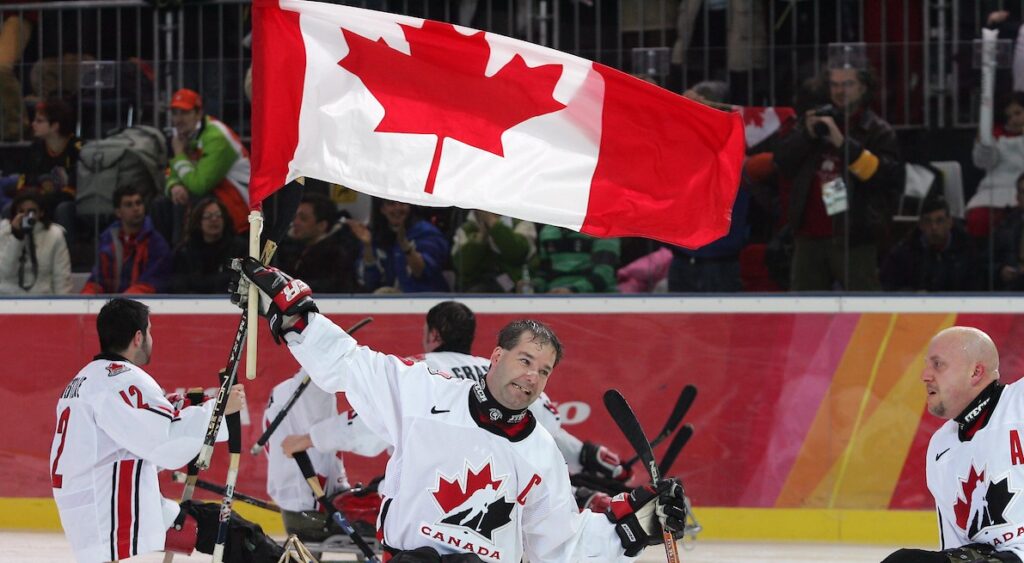
‘’They are both deserving players that really paved the pathway for me to be able to play the sport,’’ said Dixon.
Corbin Watson gave a nod to his goaltending fraternity including Canada’s Dominic Larocque and American goaltender Steve Cash.
Steve Cash, meanwhile, is already in the United States Hockey Hall of Fame, along with the 2002 U.S. Paralympic team that won the country’s first gold medal.
Contrary to popular belief, Para ice hockey was not invented in Canada. It was concocted in the early 1960s by two individuals at a rehabilitation centre in Stockholm, Sweden, who wanted to find an adapted way to play hockey.
Para ice hockey joined the Paralympic Games in 1994. Back then it was called sledge hockey but in 2016 the International Paralympic Committee changed the sport’s name to Para ice hockey.
Whether the Hall ultimately honours a pioneer, a scorer, or a builder first, the debate underscores just how rich Canada’s Para ice hockey history has become.



"*" indicates required fields
"*" indicates required fields