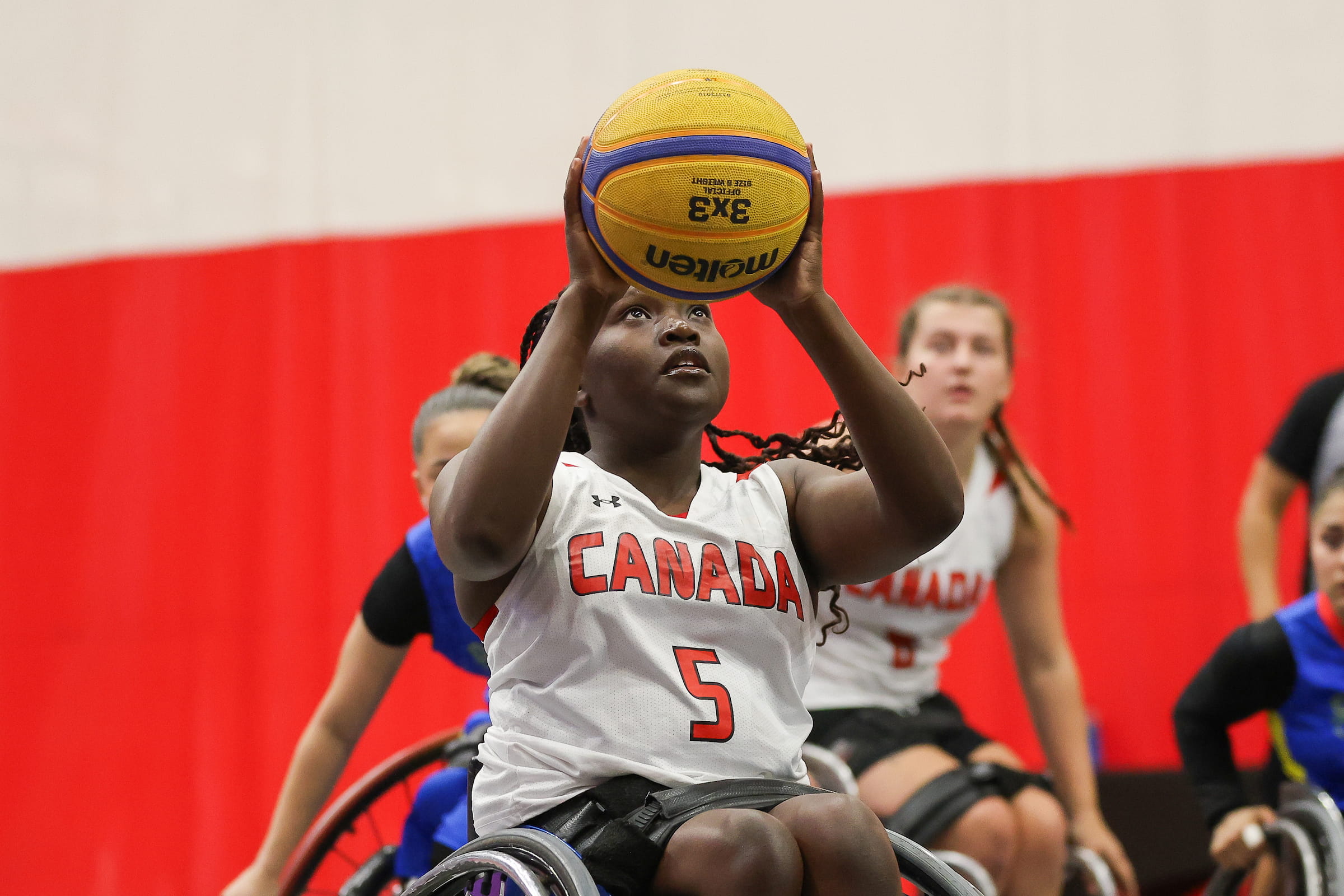
Supported in part through Paralympic Foundation of Canada (PFC) funding, development camps give athletes like Nyakundi access to coaching, mentorship, and high-performance experiences that help them prepare for the next level.
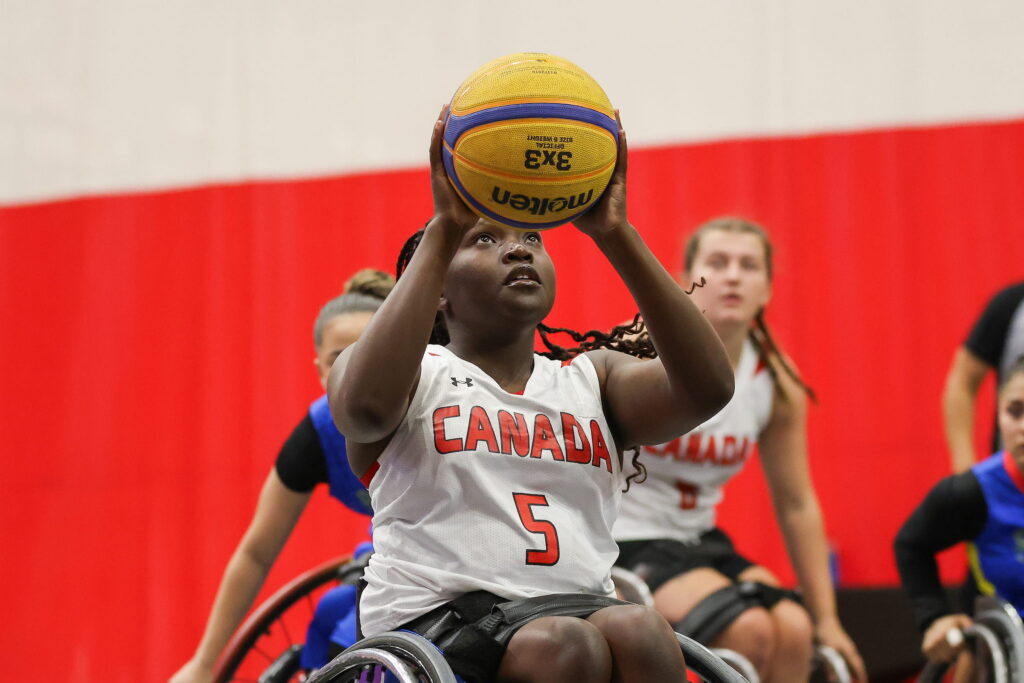
When Mercy Nyakundi first tried wheelchair basketball, she wasn’t dreaming of international competition or wearing a Canada jersey.
Born with spina bifida, she was at a rehabilitation centre, shooting basketballs into toy hoops, when a coach approached her family and invited her to try the sport.
“At first I was hesitant,” Nyakundi recalls. “I was like, ‘I don’t know if I’m really interested in doing this.'”
With some encouragement from her dad, she decided to give it a chance.
What first hooked her wasn’t the game, it was the feeling of freedom.
“I was able to be fast, and just being able to zoom past other people was what caught me.”
That sparked a journey that would eventually take her from that first introduction to Para sport to the national team.
As Nyakundi’s skills continued to develop, new possibilities began to emerge. Coaches began discussing opportunities to play collegiate wheelchair basketball and conversations about representing Canada started to feel less like a distant dream and more like a realistic goal.
“The faster and better I started to get, the more exciting the thought of playing for a national team was,” she says.
Along the way, Nyakundi attended several development camps and national team training opportunities that played an important role in shaping both the athlete and person she would become.
Bringing together young athletes from across the country, the camps provided a unique environment focused on learning, growth, and connection. For Nyakundi, they became much more than a place to improve her basketball skills.
“It’s just really cool because we get to have so many young people in the same place, and we all get to learn from so many coaches,” she says.
The experience helped her build confidence, learn from athletes with different experiences, and develop a stronger sense of who she was within the sport.
“There was no pressure,” she says. “We got to learn who we were, while also improving our basketball skills.”
Supported in part through Paralympic Foundation of Canada (PFC) funding, these camps give athletes like Nyakundi access to coaching, mentorship, and high-performance experiences that help them prepare for the next level.
For Nyakundi, those opportunities left a lasting impact.
“I don’t think I would have been able to transition as well as I did to the senior team,” she says. “I wasn’t just thrown in and learning everything for the first time. I was familiar because I had the honour of learning from so many coaches and so many athletes.”
The lessons she learned at camp extended beyond the court. They helped her arrive in new environments with greater confidence, knowing she belonged and could compete alongside some of the country’s best athletes.
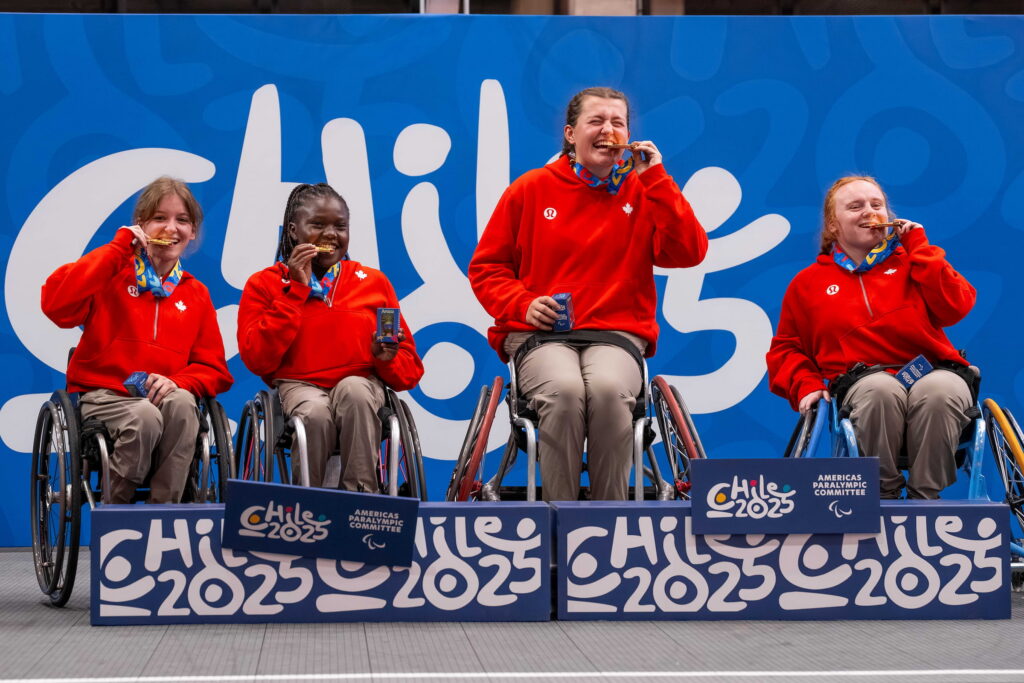
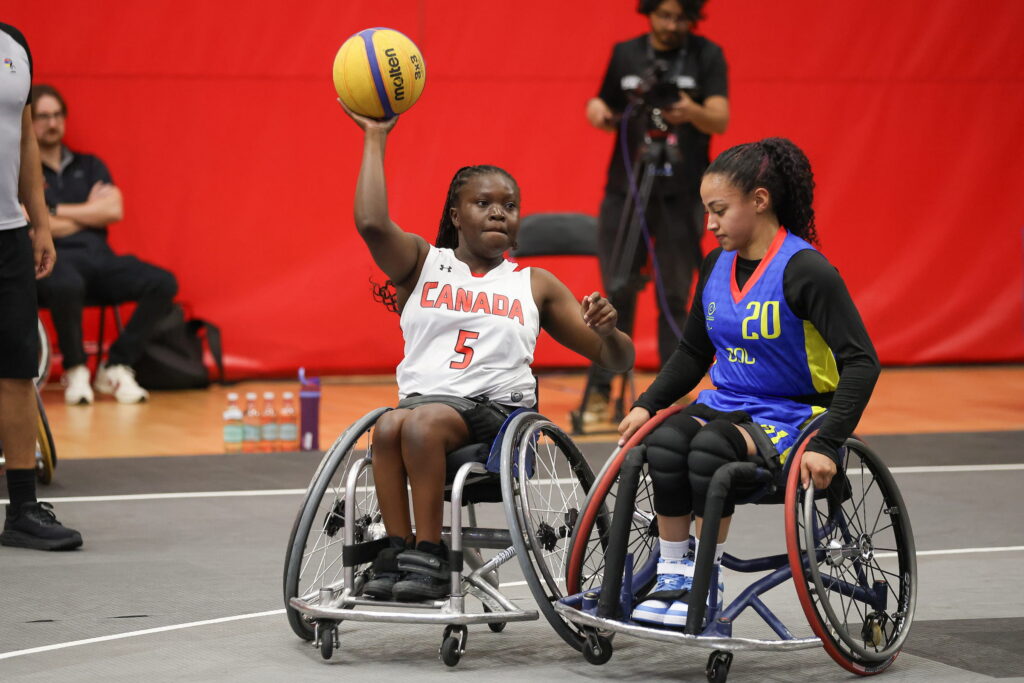
That preparation paid off in 2025 when Nyakundi was selected to represent Canada at the Youth Para Pan American Games in Santiago, Chile.
Competing alongside fellow NextGen athletes, the team faced a unique challenge. Unlike many international teams, they did not have veterans guiding them through their first major event.
“It felt like it was just us, and we were navigating this new world of representing our country,” she says.
The experience pushed Nyakundi to grow quickly as both an athlete and a leader on the court.
“I had to learn to make decisions, and it was difficult at times, but it was also really exciting.”
The young Canadian squad rose to the occasion, capturing gold and delivering a memorable first international experience.
“I wouldn’t give it up for anything,” she says. “For a first international experience, especially at such a young age, I’m really grateful that I got to have that opportunity.”
Shortly after her success in Chile, Nyakundi took another major step forward, earning a place on Canada’s senior women’s wheelchair basketball team.
In September, she competed at the Wheelchair Basketball World Championships in Ottawa, where she helped Canada win a silver medal, a milestone made even more special by the opportunity to compete in front of a home crowd.
“It was my first year, it was a major event, and it was at home,” she says. “My family finally got to see me play in person.”
The atmosphere inside the venue is something she won’t forget.
“I’ve never seen that many people. It was so loud. People were so excited for us.”
While fans often see the competition itself, Nyakundi knows the journey to that stage begins years earlier through training camps, development opportunities, and the support systems that help athletes grow.
“It takes a lot for the sport to develop,” she says. “For us as athletes to be able to have multiple training camps, to be able to travel to other countries and get reps in, it takes a lot.”
Now, with a Youth Para Pan Am gold medal and a World Championship silver medal already on her resume, Nyakundi remains focused on continuing to grow.
“I’ve learned a lot,” she says. “Especially mental and emotional side of it. I want to be a more complete athlete.”
As she looks ahead to future competitions, she hopes to continue building on the foundation that helped her reach this point.
“I think that’s essentially what we try to do,” she says. “It’s almost like a cycle. You give back and then eventually someone else comes in and they keep doing their part.”
From a hesitant young athlete to representing Canada on the world stage, Nyakundi’s journey is a testament to what’s possible when talent and determination are met with opportunity. By supporting athlete development pathways, including the camps like the ones Mercy attended, the Canadian Paralympic Committee and the Paralympic Foundation of Canada help make journeys like Nyakundi’s possible.
The camps, competitions, and development opportunities that shaped her journey didn’t just help build a national team athlete; they helped build confidence, leadership, and a sense of belonging.
Nyakundi’s journey is a reminder that when athletes are supported early in their career, the impact can reach far beyond the court.