All about Para nordic skiing: Showcasing versatile athletes in cross-country skiing and biathlon
Get ready for Milano Cortina 2026 with a primer on Canada’s top sport at most recent Games
Get ready for Milano Cortina 2026 with a primer on Canada’s top sport at most recent Games
Comprising Para cross-country skiing and Para biathlon, the sport of Para nordic skiing has been Canada’s most successful at the past two Paralympic Winter Games.
Para cross-country skiing is one of the original Paralympic Winter Games sports, featured at every edition since 1976. Para biathlon was added in 1988.
Many athletes compete in both sports, lending to their combination under the Para nordic skiing umbrella.
Canada has been a powerhouse in Para nordic skiing for over 20 years. The country’s most decorated winter Paralympian is visually impaired Para nordic skier Brian McKeever. He won 20 medals (19 in cross country and one in biathlon) including 16 gold over six Paralympic Winter Games (2002 to 2022).
With less than six months to go until the Milano Cortina 2026 Paralympic Winter Games, get ready to cheer on the Canadian Paralympic Team by learning all about Para nordic skiing, below.
PARALYMPIC ORIGINS
Cross-country skiing made its Paralympic Games debut in 1976 at Örnsköldsvik, Sweden. Men and women used the classical technique in all cross-country distances until skating was introduced by athletes at the Innsbruck 1984 Paralympic Winter Games. The new technique, however, was not officially used in a medal race until 1992 in Albertville, France.
Biathlon for athletes with a physical disability was first introduced at the Paralympic Winter Games at Innsbruck, Austria in 1988. It became a medal event for men and women at the Lillehammer Games in 1994 where, for the first time, Para nordic skiers competed at the same venue used for the Olympic Winter Games.
CLASSIFICATION PRIMER
Para nordic skiing offers three competition categories for both men and women.
Standing: Skiers race upright on equipment adapted to their needs. For example, athletes like Mark Arendz and Brittany Hudak race with one pole due to missing an arm while Emma Archibald uses no poles at all due to Amniotic Band Syndrome.
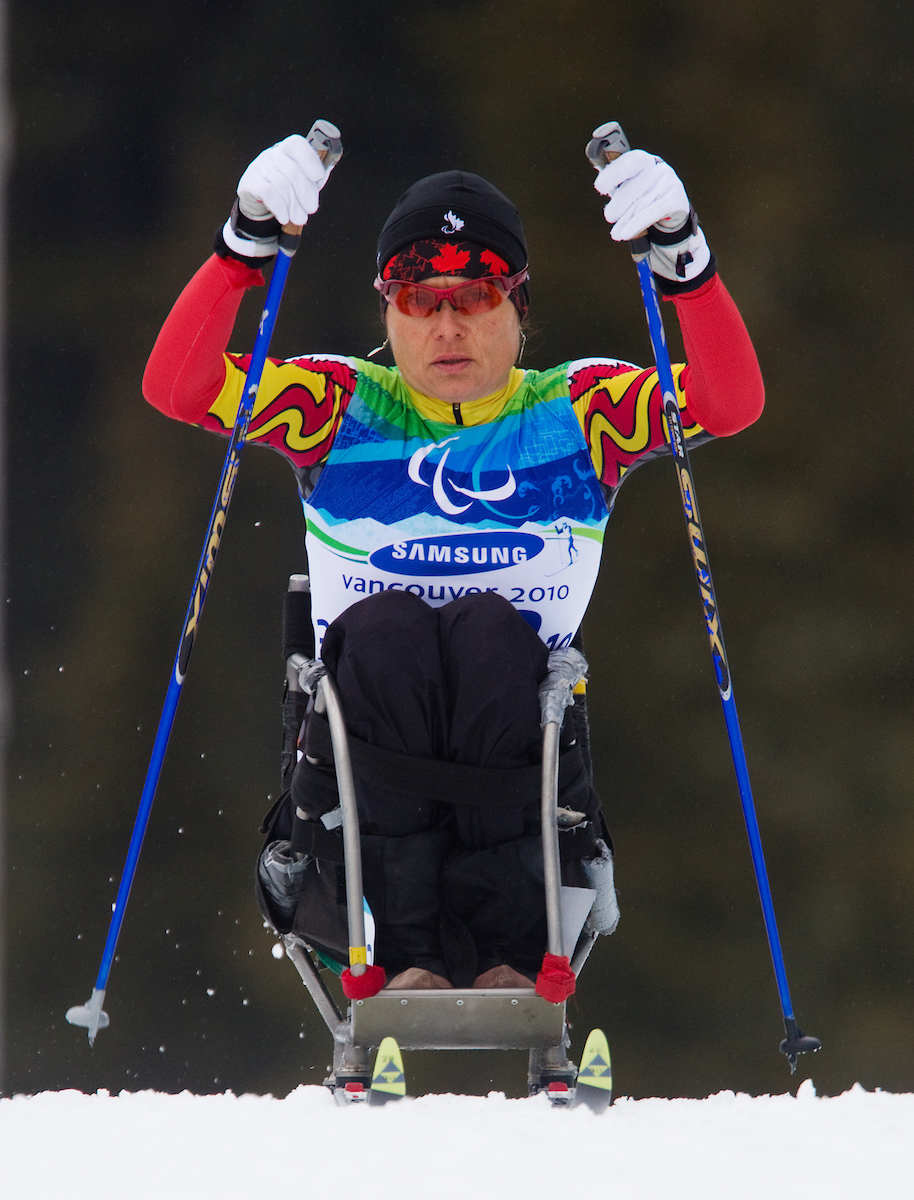
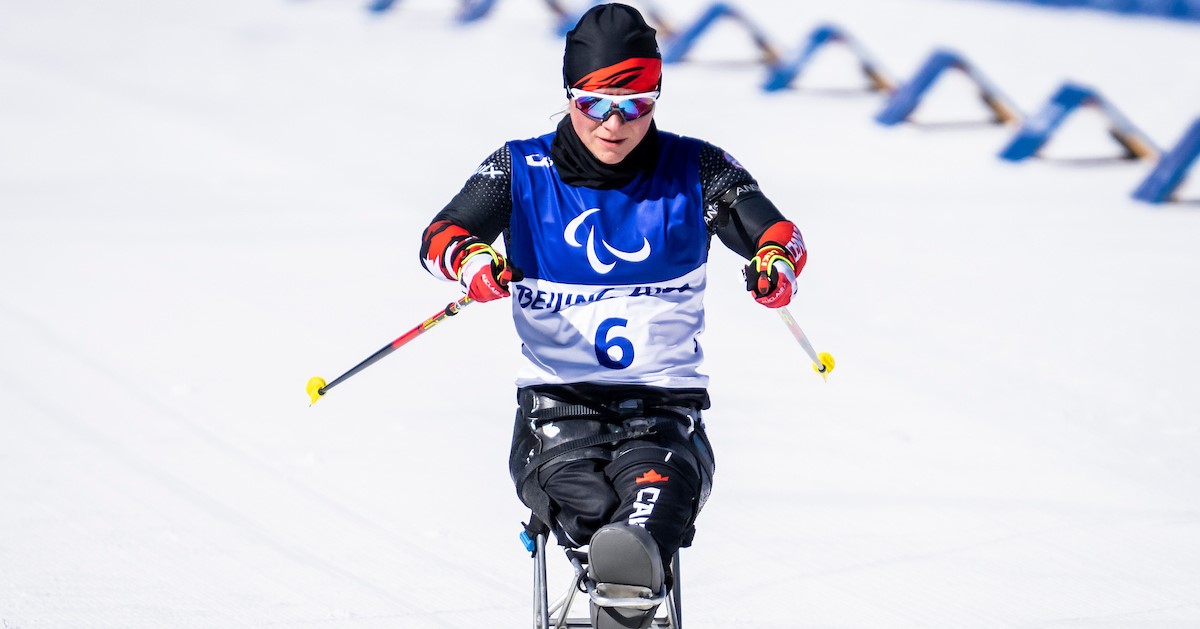
Sitting: Skiers race in a sit ski – which has a bucket seat with rigid frames that attach to two skis. The skiers use poles to propel themselves on the course.
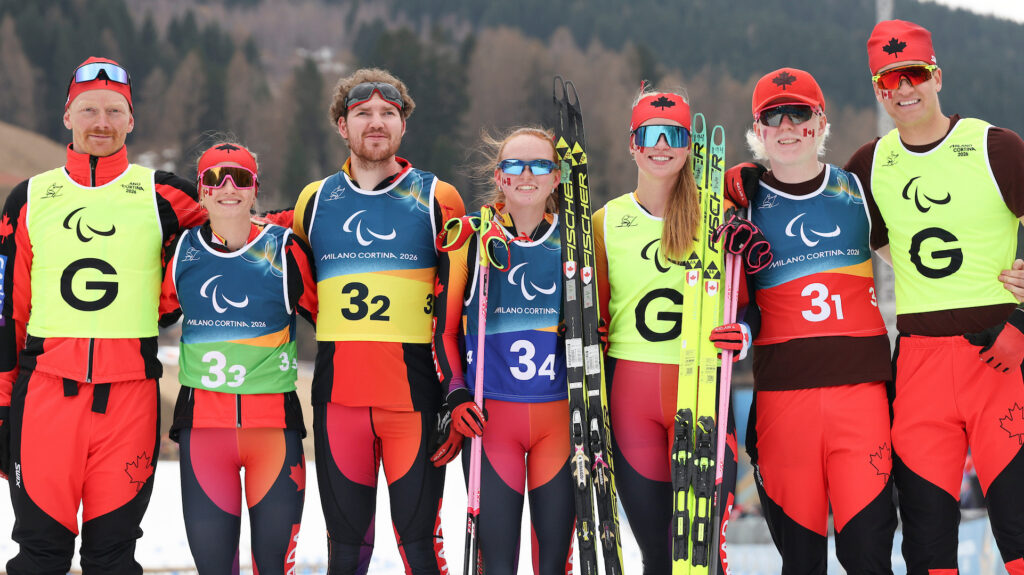
Visually impaired: Skiers with a vision impairment are guided through the course by sighted guides using verbal cues.
EVENTS
Para cross-country skiing
At Milano Cortina, the cross-country skiing events are the sprint classical, 10 kilometre classical, and 20 kilometre freestyle for men and women in all three categories. The team events are the mixed 4×2.5 km relay and the open 4×2.5 Km relay.
Para biathlon
At the 2026 Games, biathlon events are the 12.5 kilometre individual, 7.5 kilometre sprint, and the sprint pursuit. There are no team events.
Biathlon combines cross-country skiing and rifle shooting, but Para biathlon differs from Olympic biathlon because skiers must always shoot from a prone position. Athlete start times are staggered by a 30 second interval system.
In short-distance, skiers race around a 2-5km loop, stopping twice to take five shots at a target placed 10m away. Long-distance is similar but skiers must complete five trips around the loop, stopping to shoot four times.
For the shooting portion, skiers with a visual impairment use an electronic beam system including a headset that plays a varying acoustic signal to indicate when they are on target. The higher the pitch, the closer to the centre of the target.
Each shooting bout has five targets in a row that must be hit within their 15mm bullseye. In short distance, a penalty loop must be skied for each missed shot. Depending on the athlete’s classification, the loop may be 100m or 150m. In long-distance individual races, a one-minute time penalty is added to the athletes’ time for each missed shot.
CANADA’S HISTORY IN THE SPORT
Canada has won 59 medals in Para nordic skiing (27 gold, 10 silver and 22 bronze) and has been represented in the sport at every Games except 1984. Forty-six of those medals including 25 gold were earned in cross country.
At the first Paralympic Games in 1976, Lorna Manzer of Calgary was Canada’s first Paralympic Para nordic champion with a victory in the women’s II five kilometre.
Manzer was also a star in Para alpine skiing and at the first two Paralympic Winter Games, she collected two gold, two silver and a bronze. Her other medals were all earned on the slopes.
Women garnered Canada’s first nine Para nordic skiing medals at the Games from 1976 and 1998. In 2002, Brian McKeever was the first Canadian male to win a medal in the sport with two gold and a silver in cross country. Four year later he also won Canada’s first-ever biathlon medal, a bronze.
McKeever and Colette Bourgonje, a seven-time winter Paralympian, carried the Para nordic skiing medal load for the 2006 and 2010 Games before a new generation led by Mark Arendz from Hartsville, P.E.I. emerged at the Sochi 2014 Games, earning a silver and bronze in biathlon.
Four years later in PyeongChang, Arendz reached the podium a Canadian record six times with a gold, two silver and three bronze. Combined with multi-medal performances by McKeever, a 17-year-old Natalie Wilkie, sit skier Collin Cameron and Emily Young, Canada notched 16 medals (5-2-9) in Para nordic skiing (10 in cross country and six in biathlon) – its best Games yet in the sport.
Canada’s brilliance continued in Beijing at the 2022 Games, with 14 more medals. McKeever capped his epic career with three gold medals partnering with guides Russell Kennedy and Graham Nishikawa, both also Olympians.
Wilkie added two gold, a silver and a bronze, Arendz matched her record to bring his career total to 12, Cameron collected three more bronze, and Brittany Hudak was a double bronze medallist.
With many of these stars still at the top of their games, Canada is primed for another remarkable performance in Milano Cortina.
LOOKING AHEAD AT MILANO CORTINA
At the Milano Cortina 2026 Paralympic Winter Games, the Para nordic skiing events will take place at the Tesero Cross-Country Skiing Stadium in the Val di Fiemme region.
The current schedule for Para biathlon is the 12.5 kilometre individual on March 7, the 7.5 kilometre sprint on March 10, and the sprint pursuit March 13.
The cross-country skiing races are the sprint classic March 8, the 20 kilometre individual March 11, the mixed relays and open relays March 14, and the 10 kilometre individual classic March 15.
"*" indicates required fields
"*" indicates required fields