Groundbreaking Torontolympiad, the fifth Paralympic Games, celebrates 50th anniversary
First Games to include athletes with visual impairments and amputations
First Games to include athletes with visual impairments and amputations
OTTAWA – Today it is 50 years when the Paralympic Games underwent a major transformation that helped launch it on the path to becoming one of the world’s biggest sporting events.
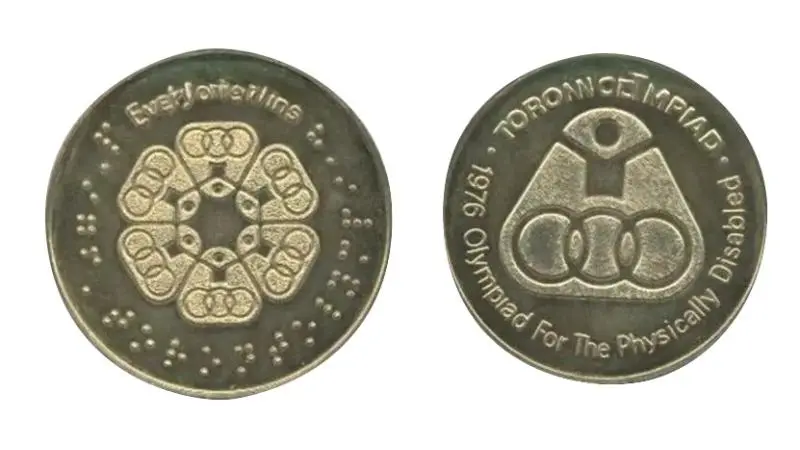
And that happened with the Torontolympiad held August 3-11, 1976 in the Ontario capital. It was officially called Torontolympiad, 1976 – Olympiad for the Physically Disabled. They were the first Paralympic Games held in the Americas and began two days after the 1976 Olympic Games Closing Ceremony in Montreal.
At the time, there was no requirement for an Olympic host city or country to stage the Paralympic Games. Many Olympic and Paralympic Games during that era were held in different cities. It wasn’t until the 1992 Games that the two events began consistently sharing the same host city.
For the Olympics, Montreal faced construction delays, labour strikes, and escalating costs to get the Olympic venues ready. Organizers were focused on staging the Olympic Games successfully.
Meanwhile, Toronto was preparing for the Paralympic Games. Toronto already had suitable accessible sports venues, particularly at York University and other sites, and was able to take on hosting duties.
While the Paralympics were still considered a fledgling event, the Toronto Games attracted a record 41 nations. There were 1,271 athletes (1,000 men and 271 women). It was the first time the athlete number surpassed 1,000.
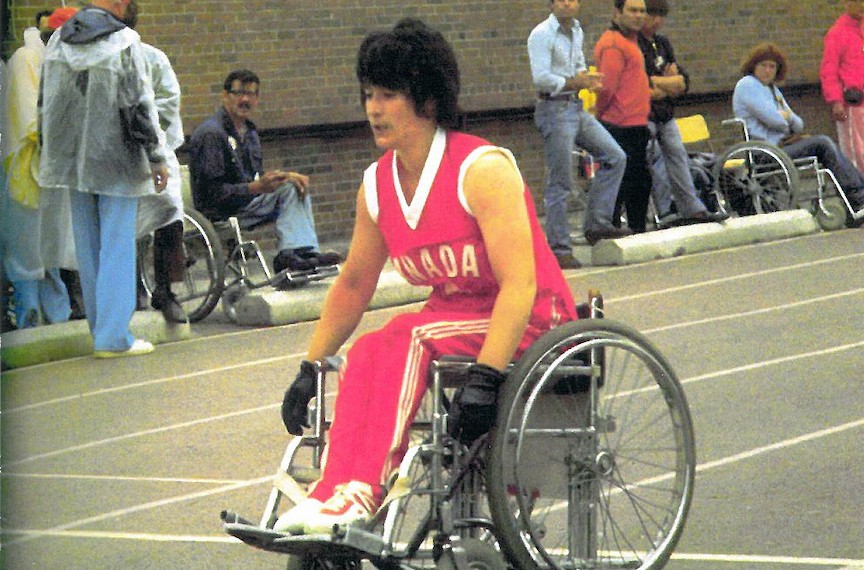
The Games broke new ground by expanding beyond wheelchair athletes, with events for athletes with amputations and athletes with visual impairments added for the first time.
A record 13 sports were on the program: archery, athletics, dartchery, goalball, lawn bowls, shooting, snooker, swimming, table tennis, volleyball, weightlifting, wheelchair basketball, and wheelchair fencing. Shooting and goalball were making official Games debuts.
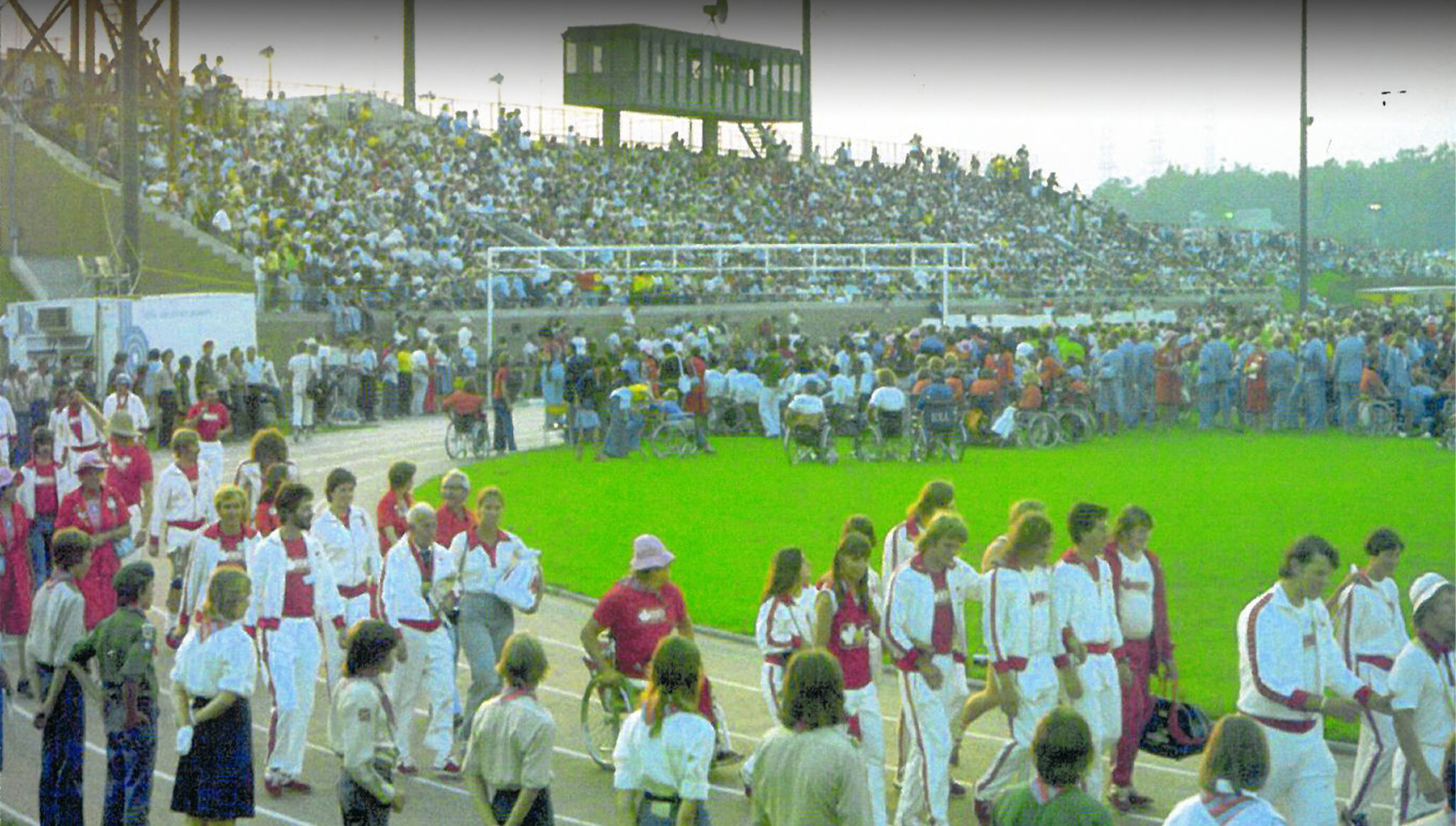
There were eight venues for the Games. Woodbine Racetrack hosted the Opening Ceremony with 24,000 in attendance. Centennial Park Stadium hosted the Closing Ceremony and athletics. More than 5,000 spectators attended the Closing Ceremony.
The Centennial Park Olympium had four sports – swimming, goalball, volleyball, and wheelchair basketball. Centennial Park Arena was another busy venue with table tennis, weightlifting, and wheelchair fencing.
Canada fielded an 89-member team, third biggest behind the U.S. at 97 and West Germany at 93.
These were the third Paralympics at which Canada participated. Its most successful athletes in Toronto included high jumper and Canada’s first big star in Para sport Arnold Boldt. He won his first two of seven gold medals at the Paralympics.
At age 18, Boldt won the high jump with a 1.86m leap and the long jump.
Jean Pacquette was a triple gold medallist with victories in the women’s discus, javelin, and pentathlon.
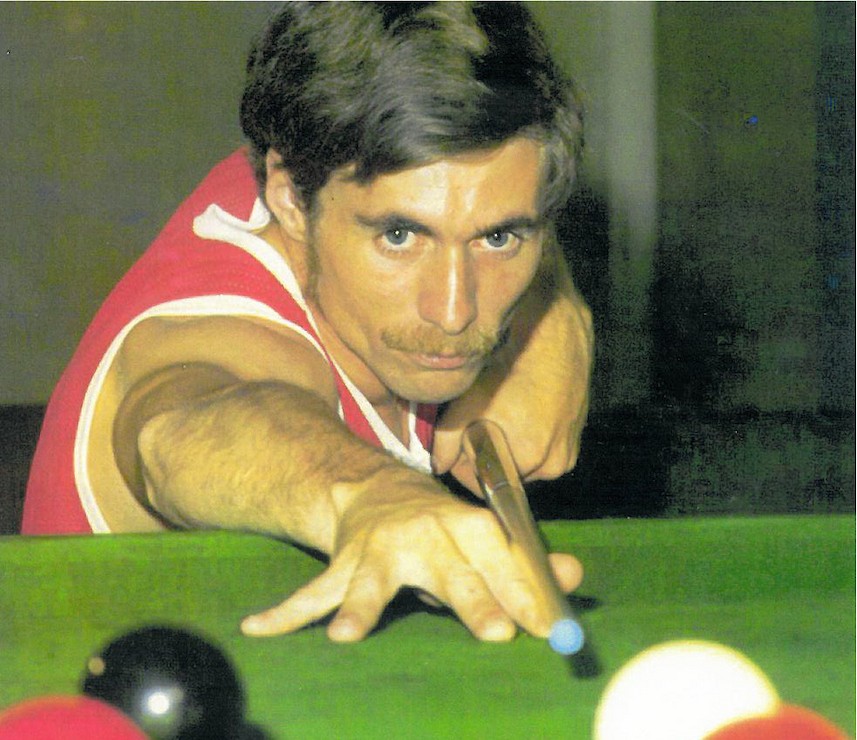
Dean Mellway, who would later play on Canada’s Para ice hockey team in the 1990s, won a gold in snooker.
It was also the first Games for Para swimmer Tim McIsaac, who would become Canada’s most successful Paralympian with 28 career medals. In Toronto he earned a gold, two silver, and two bronze.
Eugene Reimer who competed at Canada’s first four Paralympic Games, reached the podium four times in throwing events and the pentathlon.
Torontolympiad also marked the first time the Paralympic Games were televised, with some events broadcast live – a significant milestone for the Paralympic Movement. Coverage was provided by a consortium of local cable companies, including Rogers, on Channel 10 across southern Ontario, reaching a potential audience of 600,000 viewers.
Canada was sixth in the medal standings with 77 (25 gold, 26 silver, 26 bronze). The U.S., Netherlands, and Israel were 1-2-3.
Political Games
Political controversy affected the Paralympic Games for the first time. As with the Montreal Olympics, South Africa’s apartheid policies and participation sparked international protests.
South Africa was allowed to compete in Toronto, after being barred at the Olympics, and that decision proved costly. The federal government withdrew its $500,000 contribution to the Games, Prime Minister Pierre-Elliott Trudeau declined an invitation to the Opening Ceremony.
Eight countries withdrew from the Games in protest of South Africa’s participation.
Following the terrorist attack at the 1972 Munich Olympic Games, security was significantly increased at Torontolympiad. The Israeli team was housed at a secret location under heavy protection.
Wheelchair athletes stayed at York University, while other athletes were housed at the University of Toronto and the Canadian National Institute for the Blind.
Despite the controversy, Toronto’s legacy was significant.
Hosting the 1976 Paralympic Games helped spur greater Canadian investment in sport for people with a disability and laid important groundwork for Canada’s leadership in the Paralympic Movement, including the eventual founding of the International Paralympic Committee under Canadian Robert Steadward.

"*" indicates required fields

"*" indicates required fields