Fifty years later, Arnold Boldt and Tim McIsaac remember Toronto 1976
Both athletes were multi-medallists for Canada
Both athletes were multi-medallists for Canada
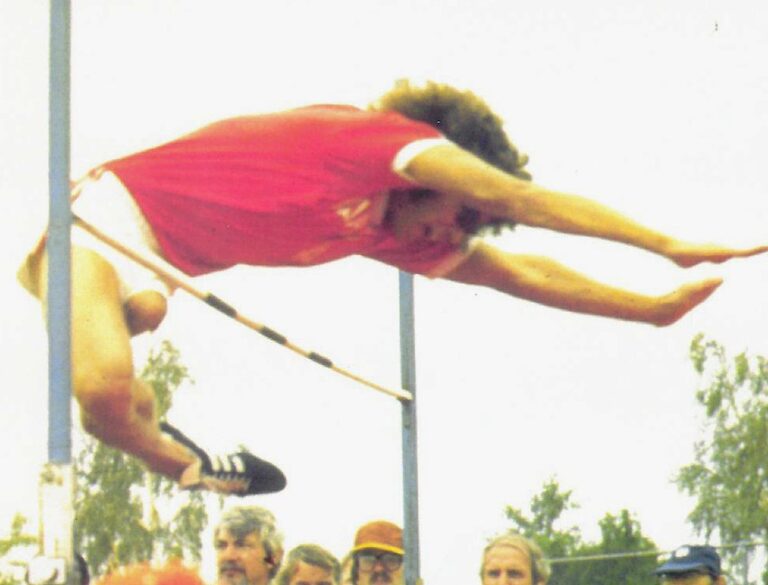
OTTAWA – It’s been 50 years since Canadian Paralympic legends Arnold Boldt and Tim McIsaac entered the mysterious world of international sport as teenagers at the 1976 Olympiad for the Physically Disabled, now recognized as the fifth Paralympic Games.
For a generation, Boldt was perhaps the first athlete with a disability Canadians had ever heard of for his exploits in the high jumping event.
He went on to win seven Paralympic gold medals over five Games, and his story inspired the 1978 CBC fictional film Crossbar.
In Toronto, Boldt set a world record at age 18 and would later make national headlines again at the 1980 Games with another world record of 1.96 metres. He also reached mind boggling heights of 2.06 metres and 2.08 metres jumping for the University of Manitoba Bisons.
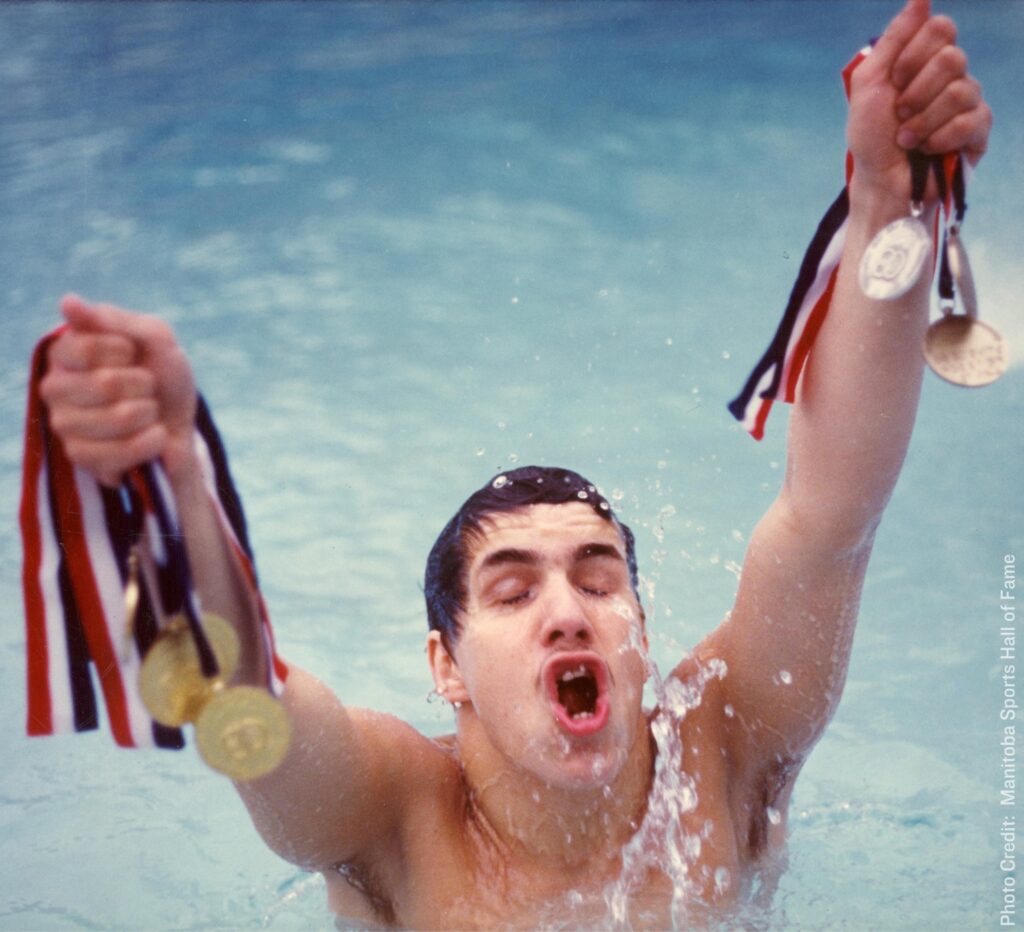
Meanwhile, McIsaac, a visually impaired swimmer from Winnipeg, was launching a record setting career in which he would become Canada’s most decorated Paralympian with 28 career medals, a record that may be unbreakable.
When first contacted by email, Boldt admitted he was startled by the realization that 50 years had passed since the Games that launched his international career.
‘’It really hit me that 50 years had passed,’’ said Boldt, 68, born in Osler, Sask. and now residing in Saskatoon. ‘’Those Games had a huge impact on my life. A lot has happened since then both personally and for the Paralympic Movement.’’
McIsaac, interviewed while his wife was driving to an appointment, says his memories of 1976 often arrive unexpectedly.
‘’We listen to the 70s station on satellite radio and I’ll hear one of those songs from 1976 and think of Toronto,’’ said McIsaac, a five-time medallist in Toronto at age 17. ‘’It takes me right back.
‘’I’m reminded of the bus rides between the residences and the pool and the camaraderie between the athletes.’’
While winning high jump and long jump gold and competing with Canada’s men’s sitting volleyball team were highlights, Boldt says the friendships he made remain his strongest memories.
An etched memory for Boldt happened at the athletes village at the University of Toronto helping a blind Canadian (not McIsaac) teammate find his room.
‘’I walked him there and explained the route,’’ said Boldt, now retired after a successful career in various senior leadership and executive roles, mainly at Saskatchewan Polytechnic and at Red River College Polytechnic.
‘’Then he stopped me at a vending machine and asked me for the order of the drinks. We became friends.’’
The Toronto Games attracted a record 41 nations. There were 1,271 athletes (1,000 men and 271 women). It was the first time the athlete number surpassed 1,000.
One of Boldt’s best memories was the Opening Ceremony held before 24,000 spectators at Woodbine Racetrack.
‘’We waited around for hours to march in,’’ he recalled. ‘’Then you walk into the stadium and the goosebumps come. Representing Canada was a completely new feeling for me.’’
Meanwhile McIsaac got hooked on developing friendships and thriving in a team environment representing the maple leaf.
‘’There were about 18 visually impaired athletes on the team and we all knew each other,’’ he said. ‘’We celebrated when people had a good day, and if somebody had a bad day you tried to lift them up because tomorrow might be their day. The Games were 10 days but it was intense.’’
Prior to the 1976 Toronto Games, Boldt and McIsaac would not have been able to compete at the Paralympics. The Torontolympiad was the first to include athletes with amputations and visual impairments.
It opened the door for a generation of athletes and set the Paralympic Movement on a path to growth few could have imagined.
‘’As a kid I dreamed that I could compete with other amputees,’’ said Boldt, who lost his right leg at age three in a farm accident. ‘’Going into the Games, I had no idea how good anybody else was. I had grown up competing against able-bodied teammates at school track meets.’’
With the big international field in Toronto, both Boldt and McIsaac picked up techniques from their international rivals and discovered some evolutions were similar.
‘’A lot of us (the leg amputees) had figured out exactly the same way to jump,’’ said Boldt. ‘’Nobody had taught us. We’d all discovered it ourselves.’’
McIsaac added that battle lines for the future were drawn in the sand. The Games would inspire McIsaac and his coaches Wilf and Audrey Strom to revolutionize the sport with the tumble turn and the tapping system to warn blind swimmers they are approaching the wall.
‘’There were two guys who beat me,’’ said McIsaac, who went on to earn a Masters degrees in disability studies and counselling psychology before working for the CNIB, Manitoba Hydro and the Government of Manitoba. He retired last year. ‘’I beat them later in my career. But in Toronto I realized that if I wanted to be on the top step of the podium, I had to get better.’’
Both athletes marvel at how much the Paralympic Movement has evolved since those Games.
In 1976 there was little funding, limited coaching, and virtually no sports science.
‘’It was very amateur,’’ Boldt admits. ‘’Nobody was professional, we invented things as we went along. My coach and I experimented and learned together.
‘’Today, Para athletes are so professional. The coaching is better, science is better, and facilities are better.
‘’People now recognize that Paralympians are incredible athletes. They’re competitive, demanding, and want to win.’’
Still Boldt worries that today grassroots opportunities have declined in some parts of Canada.
‘’We need another push,’’ he said. ‘’We need to get young athletes involved. I still go into classrooms and talk about the Paralympics because people need to know these opportunities exist.’’

For his part, McIsaac says the Paralympic journey is not complete.
‘’We’re a lot closer than we were,’’ he said. ‘’I’m glad where it is now, but I still don’t think we are there yet.’’
Both agree that Toronto 1976 gave them far more than medals. It was about lifelong friendships, and an opening to an international sports career that taught lessons that guided them long after their competitive days ended.
‘’I remind myself once in awhile that we launched a movement,’’ said McIsaac, who won a gold, two silver and two bronze in Toronto and was named Canada’s junior athlete of the year for 1976. ‘’I hope that we did make participation possible and helped make dreams come true for Para athletes around the world.
‘’It wasn’t just about us,’’ added Boldt. ‘’It was about opening the door for everyone who came after that.’’
And that door continues to be wide open.
"*" indicates required fields
"*" indicates required fields